
Used Chevy LS1 Engine for Sale: A Complete Buyer’s Guide
If you are searching for a used chevy Ls1 engine for sale, focus on three things before price: exact application, engine condition, and what is included with the assembly. The LS1 is a 5.7L (346-cubic-inch) Gen III small-block V8 used in Chevrolet Corvette and Camaro applications, as well as related Pontiac and Holden vehicles. Because year, vehicle, throttle system, reluctor, accessories, and wiring can vary, the right replacement is not simply any engine labeled “LS1.”
What Is the Chevy LS1 Engine?
The LS1 was introduced for the 1997 Chevrolet Corvette and became one of GM’s best-known Gen III small-block V8s. It uses an aluminum block and aluminum cylinder heads, 5.7L displacement, a 3.898-inch bore, and a 3.622-inch stroke. Factory output varied by application and model year; documented stock ratings range roughly from 305 to 350 horsepower and 335 to 365 lb-ft of torque.
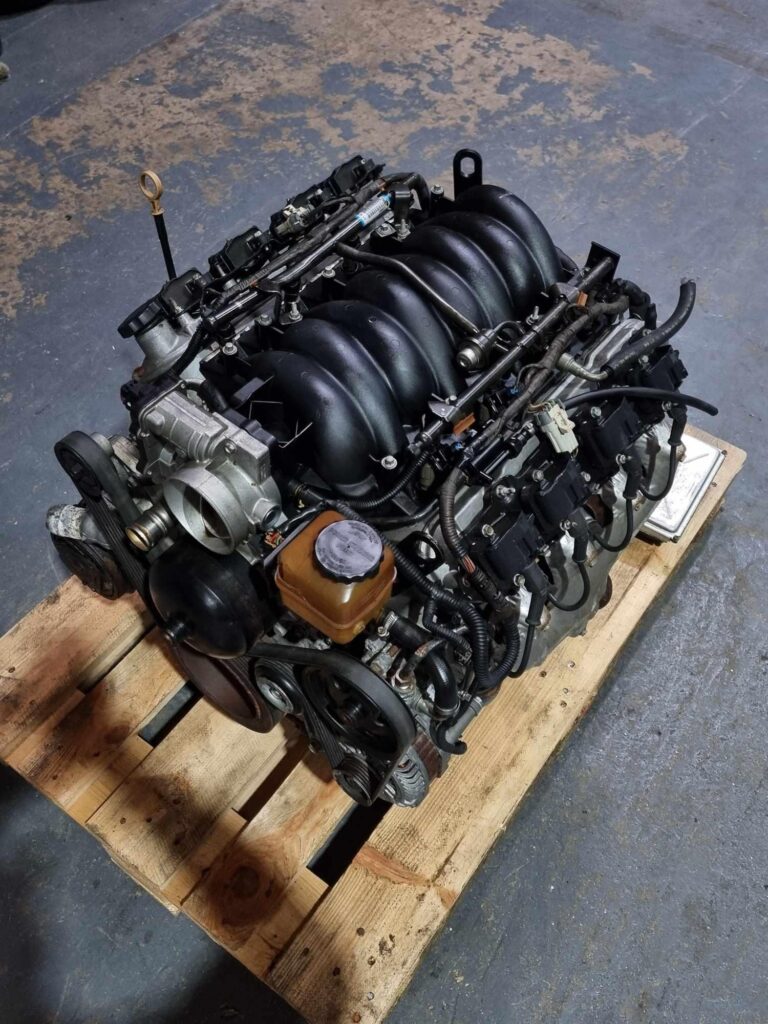
Typical Chevrolet applications include the 1997–2004 Corvette and 1998–2002 Camaro Z28/SS. The same basic LS1 family also appeared in Pontiac Firebird/Trans Am and the 2004 Pontiac GTO, so an engine from another application may require different components or controls to work in your Chevy.
Why Buy a Used LS1 Engine?
A used LS1 can make sense when the original engine has suffered internal damage but the vehicle is otherwise worth repairing. Potential advantages include:
- Lower purchase cost than some new or specialty replacement assemblies
- Access to an original GM engine rather than an unknown aftermarket combination
- Multiple donor applications, which can expand your search
However, “used” does not automatically mean “ready to install.” Mileage, storage conditions, maintenance history, previous modifications, and testing procedures can differ significantly between sellers.
LS1 Fitment: What Should You Check?
Before buying a used Chevy LS1 engine for sale, match the engine to your vehicle by VIN, model year, transmission, and original engine configuration.
Pay particular attention to:
| Fitment item | Why it matters |
| Donor year/model | Determines accessories, sensors, intake and controls |
| VIN/engine code | Helps confirm the engine family and original application |
| Throttle type | F-body LS1s commonly used mechanical throttle; Corvette applications used electronic throttle |
| Reluctor/ignition | Early LS1 configurations use a 24X system |
| Oil pan | Chassis clearance can require a different pan |
| Flexplate/flywheel | Must match the transmission and application |
| Wiring/ECU | Harness and calibration requirements vary |
| Accessories | Alternator, starter, brackets and A/C components may differ |
PSI’s LS1 reference lists 1997–2004 Corvette, 1998–2002 Camaro/Firebird and 2004 GTO applications, while also documenting differences such as drive-by-cable versus drive-by-wire systems. Verify the specific configuration rather than relying on displacement alone.
How to Inspect a Used LS1 Engine
1. Ask for the Engine’s Identity
Request the donor vehicle, model year, VIN-related information when available, engine code, casting numbers, mileage, and serial or inventory number.
2. Check the External Condition
Look for cracked housings, damaged mounting points, broken connectors, corrosion, missing sensors, stripped threads, and signs of impact. Fresh oil around seals or gaskets deserves investigation.
3. Inspect the Oil and Coolant Areas
If accessible, inspect the oil for abnormal contamination and check for signs of coolant intrusion. Milky residue, heavy sludge, or unexplained corrosion can justify additional testing before purchase.
4. Request Compression or Test Results
Compression results can provide useful evidence about cylinder condition. Ask whether the engine was compression-tested, leak-down tested, run before removal, or inspected after removal. A listing that only says “good engine” provides less information than one supported by actual test details.
5. Ask What Is Included
A “complete engine” can mean different things. Confirm whether the sale includes the intake, throttle body, fuel rails, injectors, ignition components, alternator, starter, water pump, exhaust manifolds, sensors, brackets, wiring, ECU, oil pan, flexplate or flywheel.
GM’s historical LS1 crate-engine documentation illustrates why this matters: configurations can be sold with specific manifolds, injectors, ignition components, oil pans and flexplates rather than as a bare long block.
Long Block vs. Complete Engine
Understanding the listing type helps you compare prices accurately.
Long block: Usually includes the block, crankshaft, pistons, connecting rods, cylinder heads and valvetrain, but fewer external components.
Complete engine: Often includes many accessories and induction components, but the exact contents vary by seller.
Engine assembly: A broad term that may describe anything from a dressed engine to a partially stripped unit.
Always request a written parts list or photographs showing every included component.
Where to Find a Used LS1
When comparing a used chevy Ls1 engine for sale, look at salvage yards, automotive recyclers, specialist engine suppliers, enthusiast marketplaces, and established used-parts sellers. Prioritize listings that provide donor information, clear photographs, testing details, mileage when known, and a defined warranty or return policy.
Do not compare two engines solely by advertised price. Shipping, core charges, missing accessories, and required sensors can change the total cost substantially.
Is an LS1 Good for an Engine Swap?
The LS1 is frequently considered for swaps because of its compact Gen III architecture, aluminum construction, broad parts ecosystem, and established conversion knowledge. But installation still requires planning for engine mounts, oil-pan clearance, exhaust, fuel delivery, cooling, wiring, ECU calibration, accessories, and transmission compatibility.
For a restoration, replacing an original LS1 with the same application may be simpler than adapting a different donor configuration.
Is the Chevy LS1 a 5.7L engine?
Yes. The LS1 is a 5.7L, or 346-cubic-inch, Gen III V8.
Which Chevy cars used the LS1?
The LS1 was used in the 1997–2004 Corvette and 1998–2002 Camaro Z28/SS, among other GM applications.
How much horsepower does an LS1 make?
Factory output varies by application and year, with documented ratings spanning approximately 305–350 hp.
What should I check before buying a used LS1?
Confirm the donor vehicle, engine identification, mileage, testing results, included components, fitment and warranty.
Are all LS1 engines interchangeable?
No. Related configurations can differ in throttle control, electronics, accessories and other installation details.
Is a used LS1 suitable for a swap?
It can be, provided the engine and supporting components are matched to the chassis, transmission and electronics.
FAQs
How do I choose the right LS1 replacement?
Start with the original vehicle’s year, model, VIN information and transmission, then match the donor engine and required components.
Should I buy a bare LS1 long block?
A long block can work if you already have compatible accessories and electronics. Otherwise, a more complete assembly may reduce parts hunting.
What mileage is acceptable for a used LS1?
There is no single mileage cutoff. Condition, testing, maintenance history and price matter more than mileage alone.
Does an LS1 need a new ECU?
Not necessarily. The correct ECU and wiring strategy depends on the vehicle and engine configuration.
Should I replace seals before installation?
Many installers choose to inspect or replace accessible wear items and seals while the engine is out. Follow the engine manufacturer or mechanic’s recommendations for the specific unit.
Can I install a Corvette LS1 in a Camaro?
It may be possible, but differences in throttle control, accessories, wiring and calibration must be addressed.

